We deployed OpenIM version 3.5.1 in our Kubernetes environment for our company’s IM scenarios. During development and operation, we encountered some issues. Here, I’ll document the details of the problems and the resolution process.
Problem Trigger Scenario
300 users online simultaneously, sending one-on-one messages irregularly.
Problem Phenomenon
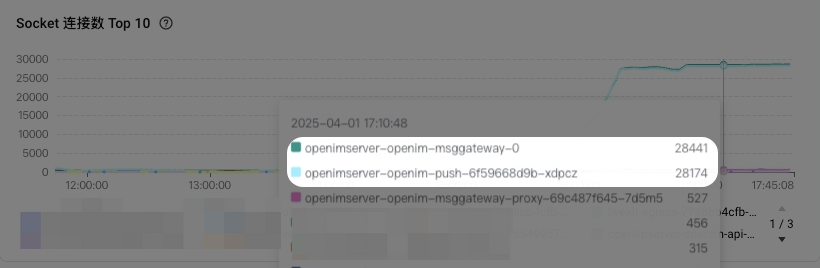
From the monitoring metrics, we can see:
- A large number of goroutines in
openimserver-openim-pushandopenimserver-openim-msggateway. - A large number of socket connections in
openimserver-openim-pushandopenimserver-openim-msggatewaypods.
Cause
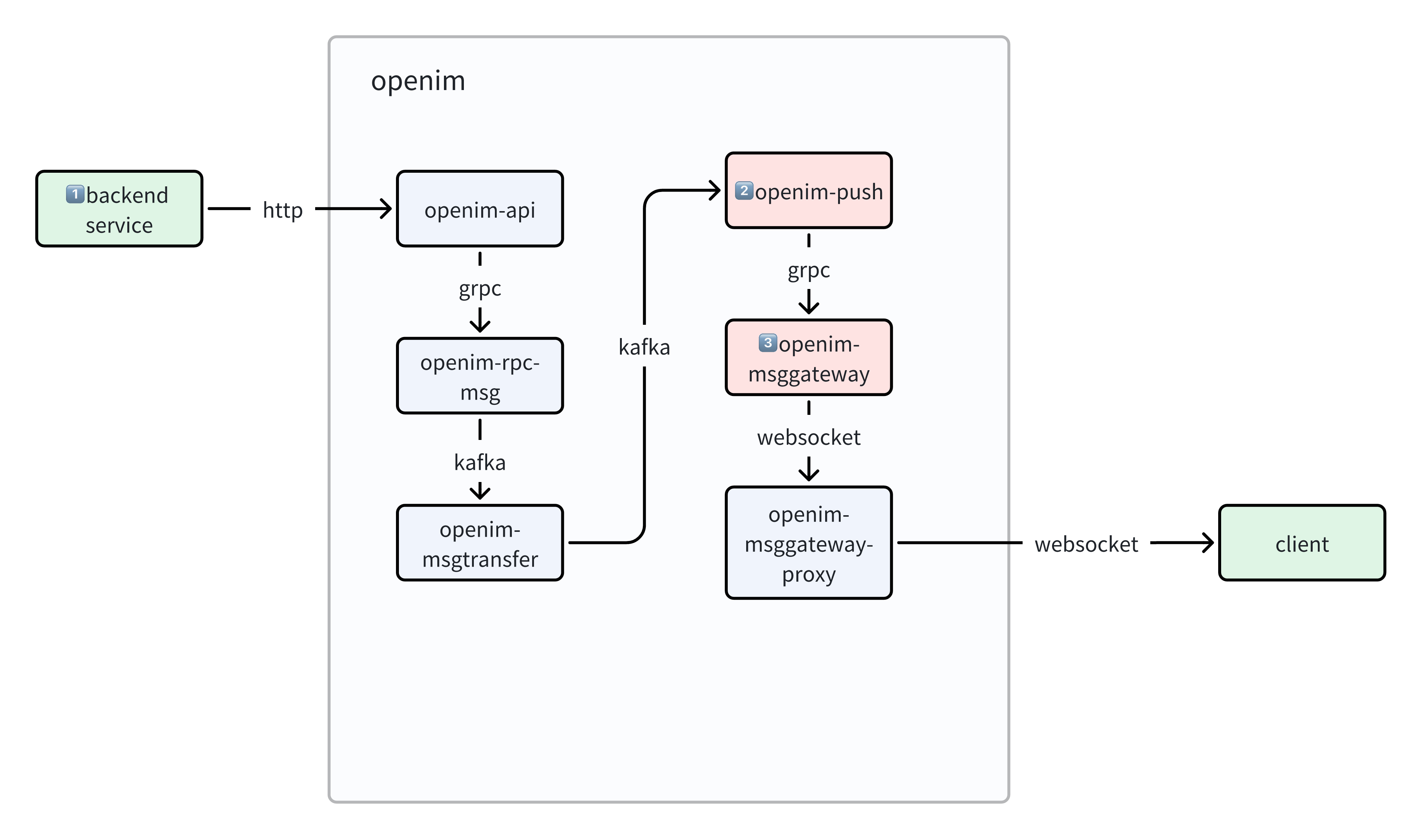
This looks like a socket leak: socket connections are opened but not actively closed, leading to a coroutine leak.
Solution
| |
Summary and Reflection
Pay attention to important runtime metrics: We saw the socket count anomaly from the monitoring dashboard in time, and found this problem after troubleshooting. Later, the openim-msggateway pod socket usage peaked at over 40,000. If not handled, in extreme cases, the pod sockets would be exhausted, causing program exceptions.
Understand the program implementation: When self-hosting open-source projects, you should be as familiar as possible with their implementation to discover problems in time.
The solution is not optimal: The correct implementation should be to maintain a TCP connection pool between openim-push and openim-msggateway, so that multiple different requests can reuse the same batch of TCP connections, speeding up the calling process and avoiding socket resource waste.